
Salah Apologises Amid Liverpool Unity Claims
When Mohamed Salah spoke out with an apology, it wasn’t dramatic or rehearsed. It felt personal. And at Liverpool, moments like that matter more than statements written for headlines.
The apology came after a period where questions were being asked. Not just about results, but about togetherness. Body language. Frustration on the pitch. Small moments that cameras catch and fans notice. Salah’s reaction showed he was aware of the noise and more importantly, that he cared about what it meant for the team.
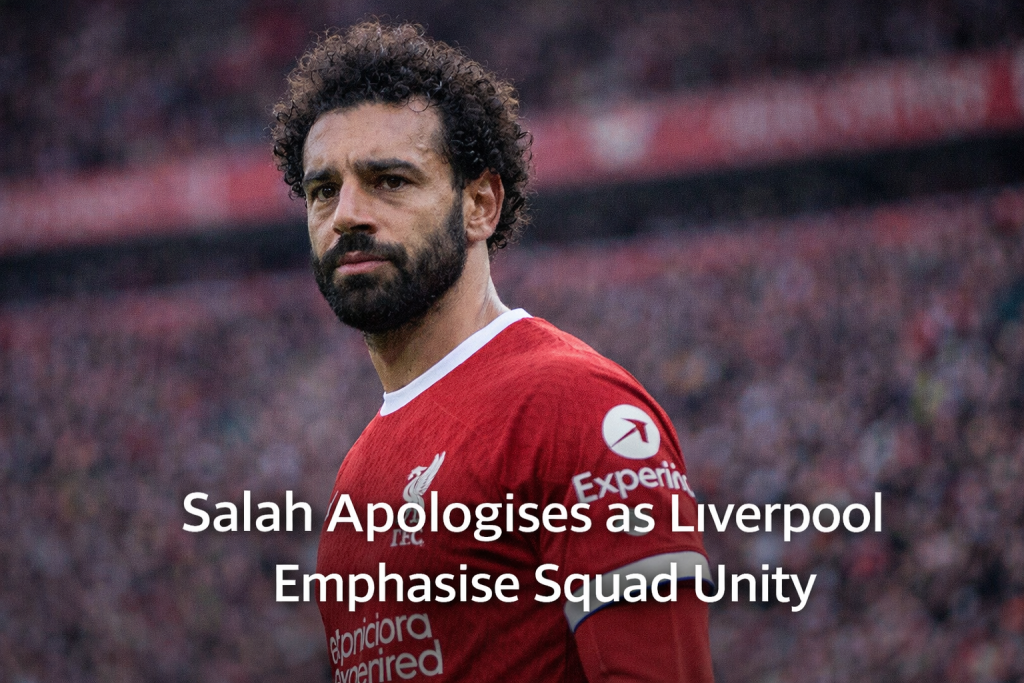
This wasn’t about one argument or one moment. It was about how things looked from the outside. A missed pass. A reaction after a substitution. A visible frustration. In modern football, those moments are replayed endlessly and turned into narratives. Salah knew that. His apology wasn’t about guilt. It was about responsibility.
What’s important is how he handled it.
Salah didn’t deflect. He didn’t hide behind excuses. He acknowledged that emotions can spill over, especially in competitive environments. Liverpool has always been a club built on unity, and any hint of cracks gets magnified quickly. Salah understood that his role as a senior player means his actions are always under the microscope.
Inside the club, the message has been clear: unity hasn’t been lost.
Teammates have spoken about togetherness, about maintaining high standards, about frustration being a sign of caring rather than division. Liverpool’s dressing room has always been emotional. Players push each other. Tempers rise. That’s not new. What matters is what happens afterward—and Salah’s apology fits into that culture of accountability.
From a human point of view, this moment says a lot about Salah. He’s not a player who enjoys controversy. He keeps his private life private. He lets football do the talking. But leadership isn’t only about goals. Sometimes it’s about knowing when to step forward and calm things down.
Liverpool is going through a demanding phase. Expectations never drop. Every game is judged harshly. When results don’t come easily, frustration builds. Salah has been through this before at Liverpool. Title races. Tight finishes. Injuries. Pressure. He knows how quickly minor issues can become distractions.
That’s why the apology mattered.
It wasn’t about pleasing fans or media. It was about reinforcing something internally. That the team is still aligned, that emotions are shared, not divided. That everyone wants the same thing, even when reactions look messy in the moment.
Liverpool’s unity claims are not empty words. Training sessions remain intense. Communication remains direct. Senior players are involved, not distant. Salah’s apology didn’t weaken his position—it strengthened it. It showed self-awareness, something not every star player is comfortable displaying.
Fans, for the most part, understood this. Many saw the apology as a sign of maturity rather than weakness. Football supporters can accept frustration. What they don’t like is silence. Salah didn’t stay silent.
There’s also context that often gets ignored. Salah carries the expectation every single week. He’s marked closely. He’s expected to decide games. When that doesn’t happen, frustration is natural. What separates leaders from individuals is how they handle those emotions publicly.
Salah chose to address it.
As Liverpool moves forward, this moment is unlikely to define anything. But it does reveal the squad’s mindset. Accountability still exists. Standards still matter. Unity isn’t just a slogan—it’s something that’s protected when tested.
In the long run, moments like this often pass quietly. But they help keep teams together when pressure rises. Salah’s apology wasn’t a headline grab. It was a reset.
And sometimes, that’s all a team needs.