
Scholes Tips Anderson as United Successor
When Paul Scholes talks about midfielders, people listen. Not because he chases headlines, but because he understands the position better than most. So when Scholes recently pointed toward Anderson as a potential long-term figure for Manchester United, it caught attention for the right reasons.
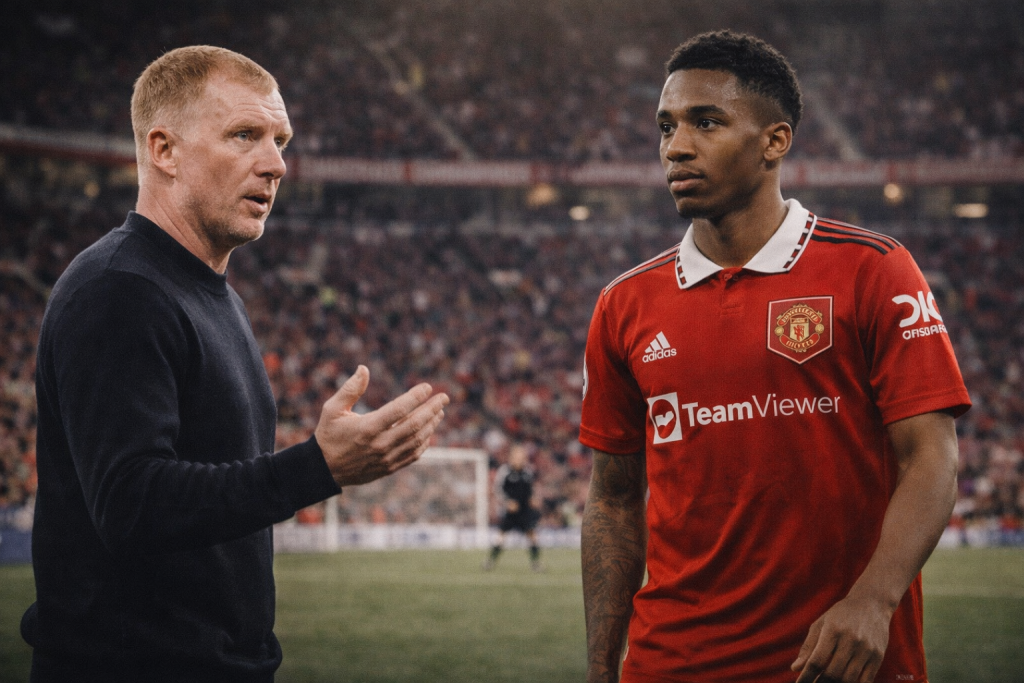
Scholes didn’t dress it up as a guarantee or prediction. He wasn’t claiming Anderson is the finished article or the following legend in waiting. Instead, his words sounded more like recognition recognition of qualities that matter at Old Trafford when expectations are heavy, and patience is thin.
What Scholes sees is balance. Anderson doesn’t try to dominate every moment. He doesn’t chase the game. He keeps things moving, stays available, and understands space. Those traits don’t always stand out on highlight reels, but they are the foundations of successful midfield play at United.
There’s also a calmness to Anderson’s game that Scholes clearly values. Even when under pressure, he rarely looks rushed. He receives the ball on the half-turn, picks simple passes, and trusts his positioning. That kind of composure is challenging to teach. You either have it or you don’t.
United have spent years searching for midfield stability. Different profiles have come and gone some powerful, some creative, some energetic but consistency has been harder to find. Scholes’ comments suggest that Anderson might grow into that stabilising role, not by copying anyone, but by understanding what the team needs in different moments.
It’s also worth noting that Scholes didn’t frame this as a short-term solution. His view felt long-term, almost patient. Development over hype. Growth over instant judgment. That’s important, especially at a club where young players are often measured too quickly.
Anderson still has work to do. Scholes didn’t ignore that. Physical development, decision-making in big matches, and leadership will all come under scrutiny as his role increases. But potential isn’t about perfection it’s about trajectory. And Scholes clearly believes Anderson’s path is pointing in the right direction.
For fans, the comparison carries weight. Scholes is not someone who hands out praise easily, particularly when it comes to midfield standards at United. If he sees something worth backing, it’s usually because it reminds him of qualities that have lasted over time.
Inside the club, comments like this can also matter quietly. Confidence grows when belief comes from the right voices. For a young midfielder trying to establish himself, knowing a club icon sees value in your game can be grounding rather than pressurising.
Scholes isn’t asking Anderson to replace him. That comparison never really works. What he’s suggesting is something more realistic that United may already have a player capable of growing into a role the club has missed for a long time.
Whether Anderson fulfils that belief will depend on consistency, opportunity, and how he handles responsibility. But for now, Scholes’ words feel less like hype and more like a nod of trust.
And at Manchester United, trust from someone like Paul Scholes still carries meaning.