
Saudi Arabia’s 2034 World Cup Bid Tops Evaluation Scores
Saudi Arabia winning the bid for the 2034 World Cup didn’t exactly land like a shock. It was December 2024, and by then everyone already knew how it would end. Australia had stepped aside long before the final decision, and once that happened, the whole thing felt more like a formality than a competition. FIFA confirmed it, dropped the numbers, and moved on.
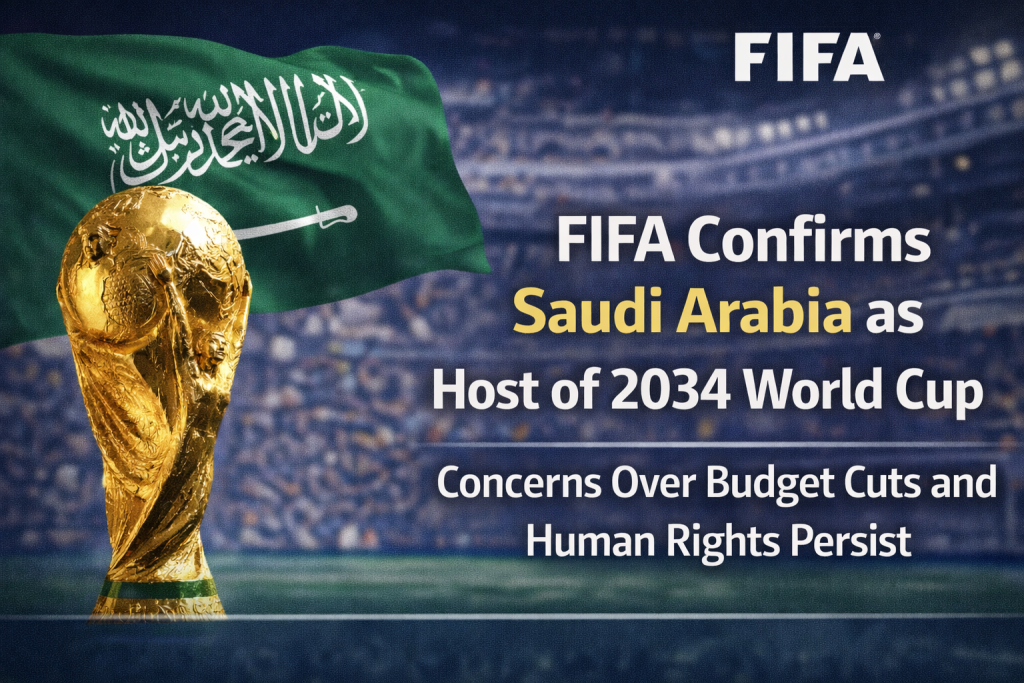
The number that stuck was the evaluation score. 4.2 out of 5, the highest technical score FIFA has ever given a World Cup bid. That alone carried the story for weeks. People argued about whether it made sense, whether the criteria were too generous, whether FIFA had already decided the outcome before the process even began. Then, like most football news cycles, the noise faded.
Fast forward to late 2025, and the mood around the project feels different.
The big shift is money. Or rather, the lack of it compared to earlier promises. Saudi Arabia isn’t pretending cash is unlimited anymore. The Public Investment Fund openly talked about tightening spending. Oil prices aren’t what they were, global markets feel shaky, and suddenly the World Cup isn’t being treated like a blank cheque project.
That change hit stadium plans first. The original vision was wild — fifteen venues, some of them futuristic to the point of absurdity. Now that number is quietly shrinking. Ten seems more realistic. Maybe fewer. Architects have been told to simplify designs. Contractors who expected to be breaking ground months ago were told to pause. Some projects are being redesigned almost from scratch.
The Neom stadium is the best example. Built into a mountain, floating above the desert, something straight out of a concept video. It still exists on paper, but anyone being honest knows it won’t look like the original renders. Those first images were about ambition, not feasibility.
Then there’s the heat. It’s the elephant in the room that everyone talks around. Summer football in Saudi Arabia isn’t realistic. It never was. So the assumption is the same solution as Qatar — November to December. FIFA hasn’t officially locked it in yet, but nobody seriously expects a summer tournament. Add to that Saudi officials saying they’d be open to 64 teams if FIFA wants to expand again, and you start wondering how crowded the calendar is going to get.
While all that’s happening, the human rights conversation hasn’t slowed down for a second. Amnesty International, Human Rights Watch, labour groups — they’ve stayed on this from day one. Their argument hasn’t changed much either. Migrant workers still make up the backbone of construction. Wage disputes still exist. Safety concerns still exist. Fear of speaking up still exists.
There was at least one reported worker death this year tied to World Cup-related projects, and that reignited the criticism. Legal groups pushed FIFA to appoint independent monitors. FIFA refused, saying Saudi Arabia had provided internal assurances. That sentence sounded very familiar to anyone who followed the Qatar build-up.
That’s where the debate always splits. Some fans say football shouldn’t be dragged into politics. Let the game grow. Let new regions host. Others argue that once workers start dying and rights are ignored, it’s already political whether FIFA admits it or not. Both sides talk past each other, and neither one is going anywhere.
Purely from a football perspective, though, the potential is massive. Saudi Arabia has a young population that genuinely cares about the game. Domestic matches already draw big crowds. The atmosphere at some Saudi Pro League games is intense, loud, chaotic in a good way. A World Cup there wouldn’t be quiet or sterile.
It would also be the first full 48-team World Cup hosted by a single country, not split across continents like 2026 or partially shared like 2030. That alone makes it a huge moment for Asian football.
But right now, the whole project feels like it’s breathing a bit heavy. Budgets are tighter than expected. Timelines are already under pressure. Criticism is louder than FIFA probably hoped it would be by this stage. And nine years doesn’t feel that long when you remember how fast 2026 is coming.
I’m split on it. Part of me wants to see those desert stadiums lit up at night, wants to see knockout matches played in front of tens of thousands of fans who’ve waited their whole lives for something like this. Another part of me remembers how many promises were made before, and how many of them didn’t quite land the way they were sold.
Saudi Arabia 2034 could be massive. It could change how the region sees itself in world football. Or it could become another tournament remembered as much for what went wrong as for what happened on the pitch.
Right now, it feels like it could still go either way.